Hong Kong is an international metropolis located on the edge of northern tropic. Renowned as a global financial center, Hong Kong often surprises people by its great biodiversity, especially in the coastal marine ecosystem. It is estimated that Hong Kong is home to about 6,500 marine species and over 90 species of reef building corals. Nevertheless, the costal coral community in Hong Kong is currently under a wide range of stress locally, regionally, and globally.
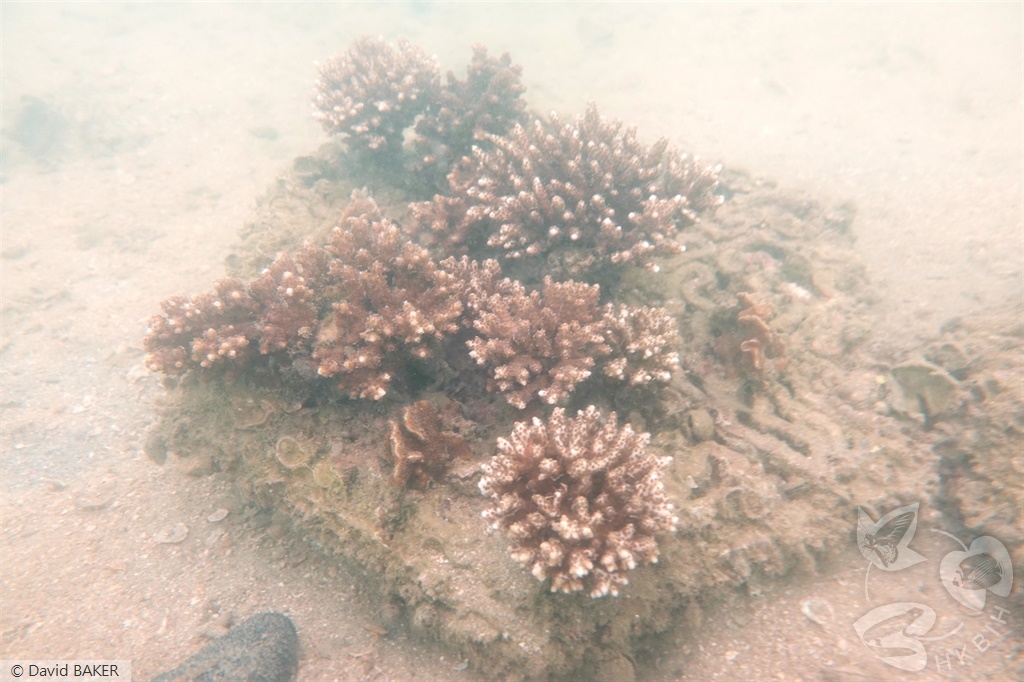
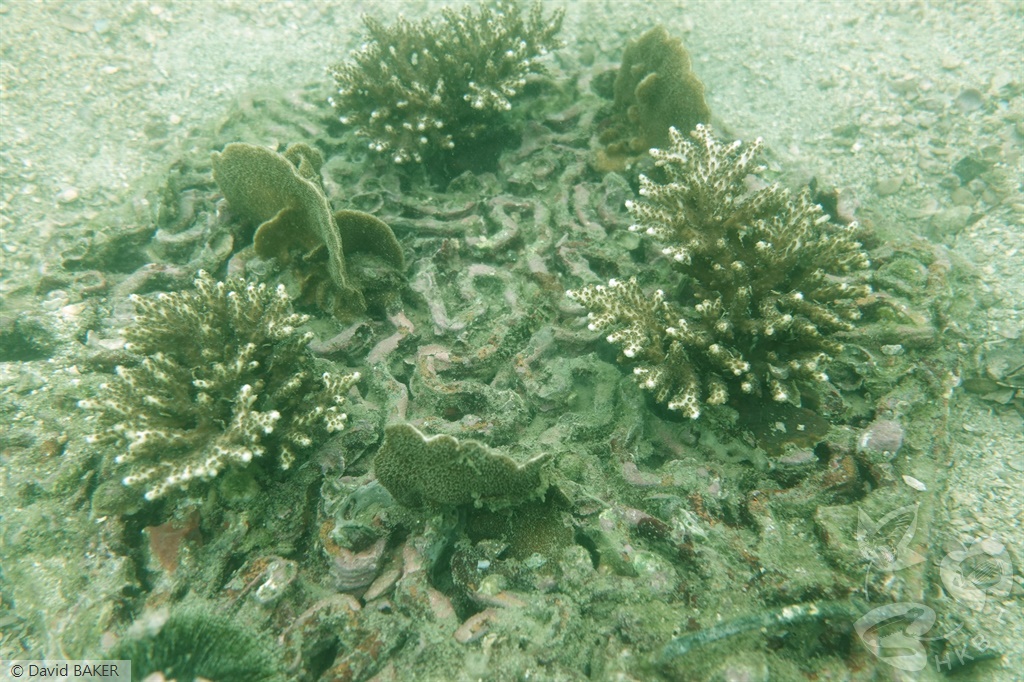
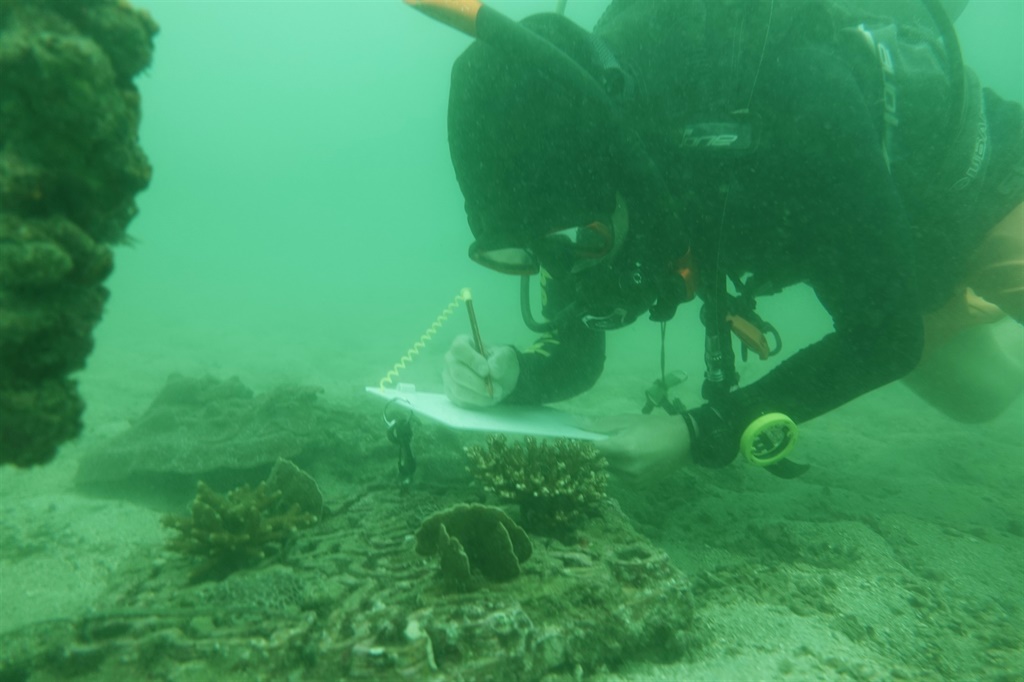
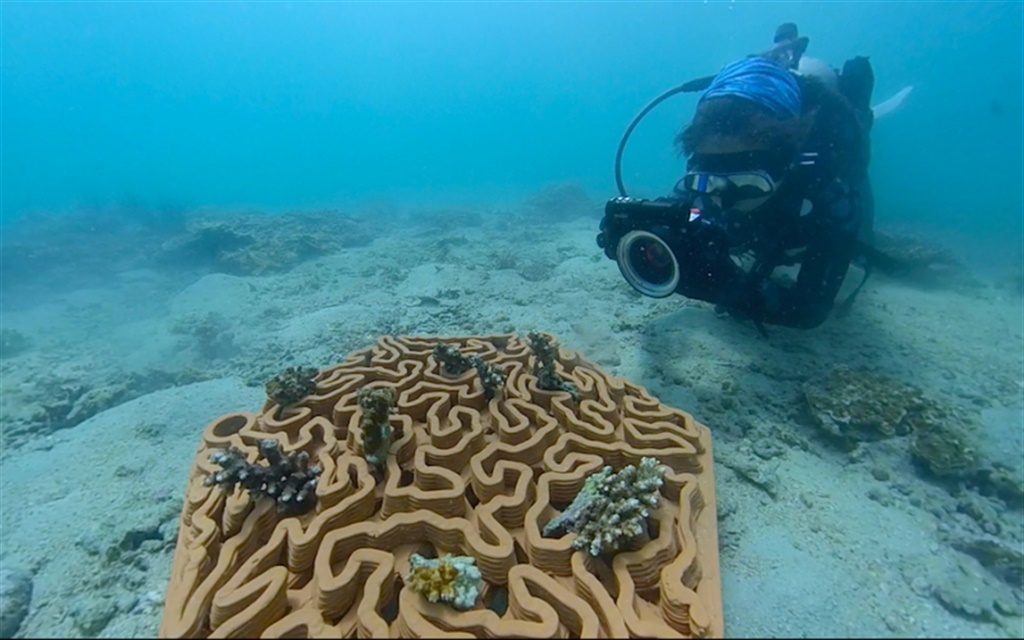
To enhance the restoration success and to restore marine biodiversity, the Hong Kong Agriculture, Fisheries and Conservation Department (AFCD) commissioned this study where we use 3D printing technology to construct artificial coral reef tile structure made by terracotta clay to actively restore degrading coral communities. 3D artificial reef units were deployed in three different sites in Hoi Ha Wan Marine Park (HHWMP). In the experimental site Coral Beach, twenty-four (24) 3D artificial reef tile units were deployed and seeded with three hundred and seventy-eight (378) coral fragments. In the restoration site Moon Island and demonstration site by the WWF Hoi Ha Marine Life Centre, four (4) and five (5) 3D artificial reef units, respectively, were deployed and seeded with coral fragments of various species. We monitored the survivorship and growth of these fragments quarterly over a study period of 15 months. In the experimental site, we recorded 1) a high survivorship (97.6%) of the coral fragments and 2) positive physical growth of all three outplanted coral genera: the maximum linear extension for Acropora, Pavona, and Platygyra increased by 69%, 37%, and 25% respectively. These results suggested the artificial reef structures used in this study can provide suitable substrate to facilitate coral attachment, survivorship, and growth in coral restoration projects.


| Principal Investigator | Dr. David BAKER |
|---|---|
| Affiliation | The Swire Institute of Marine Science, The University of Hong Kong |
| Period | 2020–2024 |
| Funding Source | Agriculture, Fisheries and Conservation Department |
Information Source: Dr. David BAKER